7 Things to Consider When Sourcing Bathroom Fixtures and Kitchen Sinks from a B2B Manufacturer
June 19, 2026

Author: Paulina Grodziska
Specialist in B2B sanitary ware manufacturing, sourcing and marketing, with a focus on turning product capabilities into commercial growth.
Sanitary ware brands, retailers, architects, hotel owners and many other businesses often look for a supplier of bathroom fixtures or kitchen sinks that understands the needs of corporate buyers, not just individual consumers. Choosing such a partner is not easy. It is also not a decision you want to get wrong.
A poor supplier choice can cost you time, money, energy and market opportunity. It can slow down a product launch, create quality or communication issues, complicate specification work, or leave you with products that do not fit your customers’ expectations. In other words, sourcing bathroom fixtures and kitchen sinks is an operational and commercial choice that can influence your business for years.
That is why this is not the kind of decision to make on impulse, on instinct, or on one narrow criterion such as price. It requires a careful evaluation of your goals, your target market, the type of cooperation you need and the supplier’s real ability to support your business. But what exactly should you look at? And how do you assess whether a B2B bathroom fixture manufacturer is genuinely the right fit?
We have spent decades in the B2B bathroom fixtures and kitchen sink industry, so we know how complex this decision can be. We have worked with sanitary ware brands, retailers and distributors looking to introduce a new product line. We have also supported architects, hotel projects, residential developments and furniture manufacturers for whom bathroom fixtures or kitchen sinks may not be the core business, but choosing the right supplier is still a crucial decision.
In this guide, we summarise 7 key considerations that can help you make a better sourcing decision. We discuss issues such as choosing the right cooperation model, checking whether the supplier can deliver repeatable quality, securing workable commercial terms, and selecting products that will truly impress the people who ultimately use, buy or specify them. We also include practical tips to help you evaluate a potential supplier more confidently.
Our goal is to help you choose the right bathroom fixture manufacturer or kitchen sink supplier for your brand, project or business. We hope you find this guide useful, but if you still need advice after reading it – click here and speak with one of our specialists.
01. Define what you actually need: private label, OEM, ODM or contract manufacturing
Before choosing a bathroom fixtures manufacturer, it is worth clarifying what type of cooperation you actually need. Terms such as private label, OEM, ODM and contract manufacturing are often used differently by different suppliers, which can create confusion at the very beginning of the sourcing process.
In practical terms, the differences are simple. In a private label model, you select existing products from the manufacturer’s portfolio and sell them under your own brand. This is often the fastest route if you want to expand your offer with ready-made bathtubs, washbasins, shower trays or kitchen sinks without developing a new product from scratch.
ODM, or Original Design Manufacturer, gives you more flexibility. You start with one of the manufacturer’s existing designs, but adapt it to your market, technical requirements or brand expectations. This may involve changes to dimensions, finishes, colours, installation details or other product features.
OEM, or Original Equipment Manufacturer, is different. In this model, you provide the design and technical specifications, and the supplier manufactures the product according to your requirements, under your brand. This is usually the right route when you already have a developed product, but need reliable production capacity.
Custom product development goes one step further. Here, you bring an idea, concept or market need, and the manufacturer’s design and engineering team helps transform it into a ready-to-manufacture product. This model takes more time, but it is often the best choice when uniqueness and premium positioning are central to your brand.
“The model you choose should depend on your commercial goal. If you need to fill a portfolio gap quickly, private label may be the best option. If speed matters less and some adaptation is required, ODM can be a better fit. If you already own the design and need additional capacity, OEM would be the natural route. If your priority is a product no one else has, custom development would be the strongest choice.”
Tomasz Cholewa, CEO at Marmorin
There is also a fifth possibility: distribution under the manufacturer’s own brand. Some retailers, distributors and project suppliers do not need private label at all. They simply want access to a premium bathroom fixtures or kitchen sinks portfolio that can strengthen their existing offer.
The key question is not which model sounds most advanced. The key question is what you want to achieve commercially: speed, differentiation, production capacity, flexibility, exclusivity or access to an established premium brand. Once that is clear, choosing the right sourcing model becomes much easier.
If you want to see how these cooperation models work in practice, take a look at our dedicated pages for each option: private label bathroom fixtures and kitchen sinks, OEM sanitary ware and sinks manufacturing, ODM bathroom fixtures and kitchen sinks, and custom bathroom and kitchen product development. They explain the differences in more detail and show which model may fit different types of B2B projects.
02. Decide whether you need one product or a coherent product line
Before choosing a manufacturing partner, consider whether you are sourcing a single product or building the foundation for a broader collection. At first, you may only need one product: a freestanding bathtub, a countertop washbasin, a shower tray or a kitchen sink that fills a clear gap in your offer. But if that product performs well, you may later want to extend it into a more complete line.
This matters because not every supplier is equally prepared to support that next step. A manufacturer may be able to deliver one attractive washbasin, but that does not automatically mean they can help you create a matching bathtub, shower tray or kitchen sink with the same design language, material quality, finish and commercial positioning.
If your long-term goal is to build a premium product family, make sure you get answers to the right questions early:
- Can the supplier manufacture the full product family you may need: washbasins, bathtubs, shower trays and/or kitchen sinks?
- Can they keep the collection visually consistent through matching materials, colours, finishes and surface quality?
- Do they have in-house design and engineering capabilities to turn one product idea into a wider collection?
- Can they maintain repeatable quality across different shapes, sizes and future line extensions?
These questions are especially important for brands, retailers and distributors that want more than isolated SKUs. A coherent product line is easier to present in a catalogue, showroom or project specification. It gives customers a clearer story and makes the offer feel more intentional.
So even if you begin with one product, consider choosing a supplier who can support where the product line may go next.
To see what these products and collections can look like in practice, explore our dedicated pages:
- Private label & ODM washbasins
- Private label & ODM bathtubs
- Private label & ODM shower trays
- Private label & ODM kitchen sinks
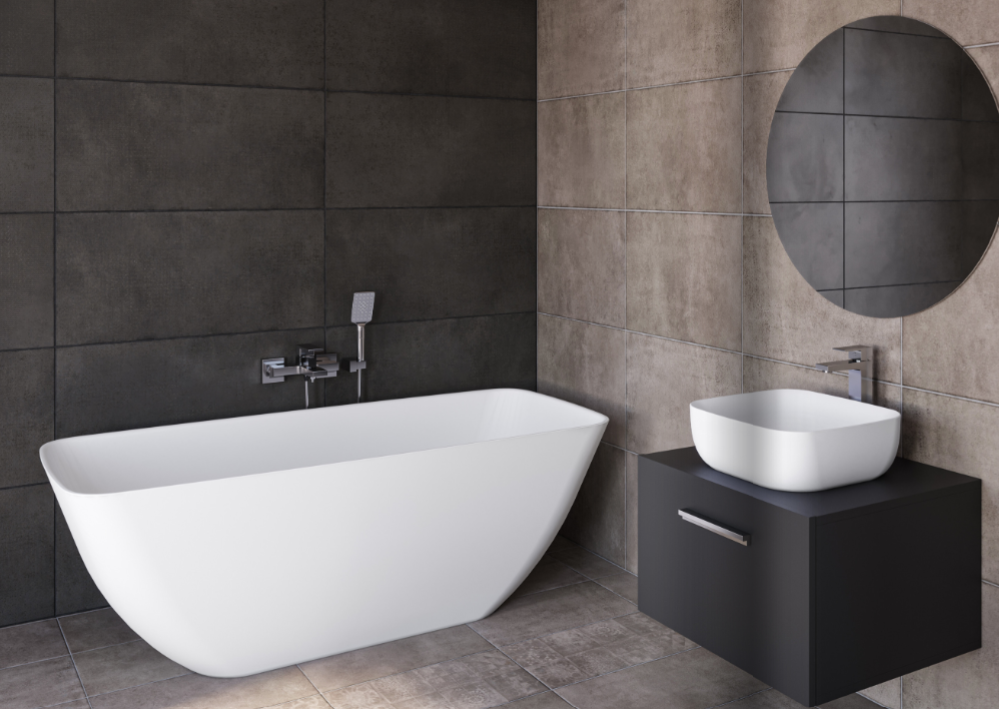
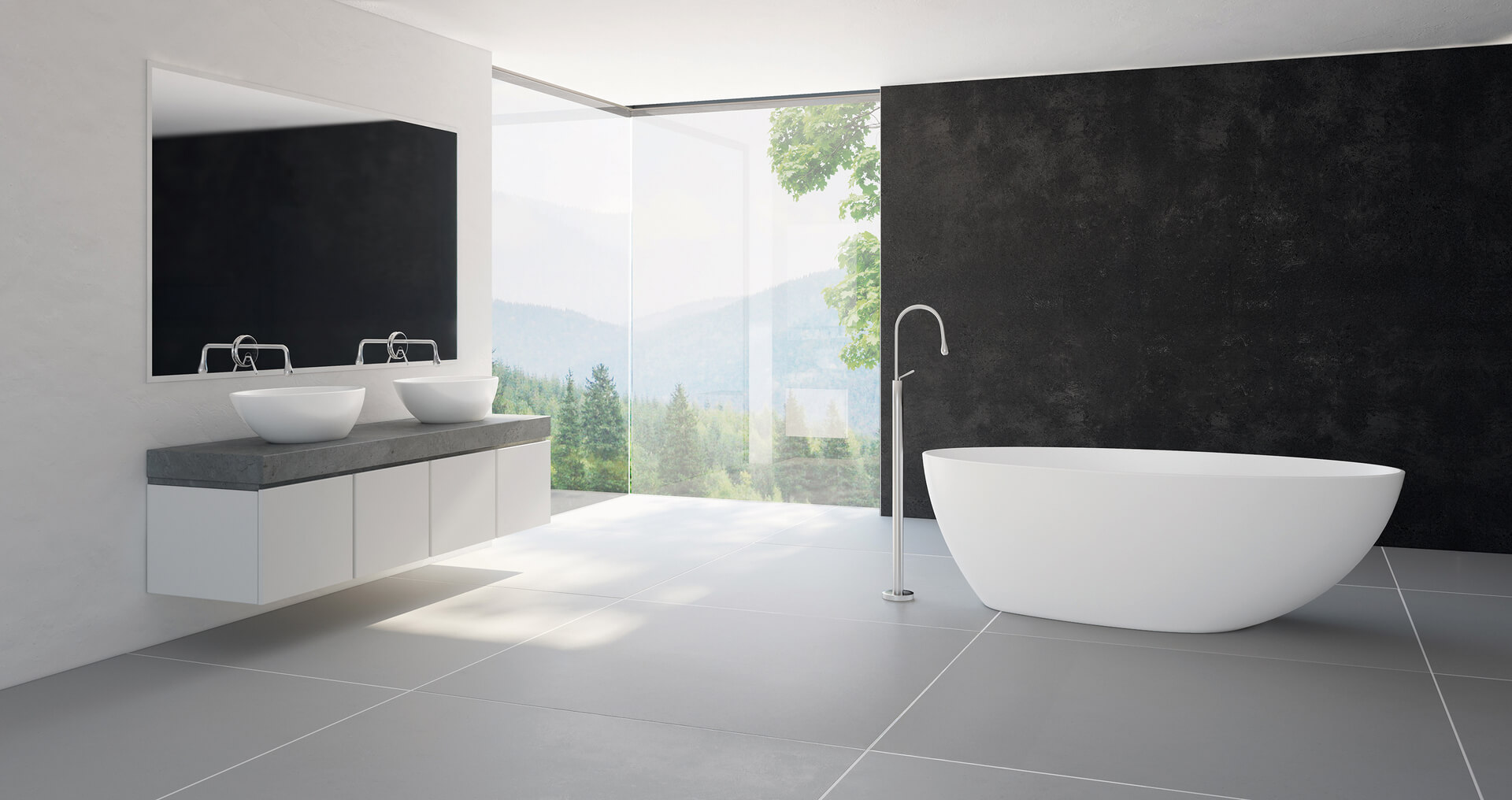
03. Evaluate material quality, durability and product feel
Most bathroom fixture and kitchen sink manufacturers do not work equally well with every possible material. Their production capabilities are usually built around selected materials, technologies and finishing processes. That is why choosing a supplier is not only about asking what they can manufacture. It is also about checking whether their material expertise fits your product idea and your target customer.
Three factors are especially important here: material quality, durability and product feel.
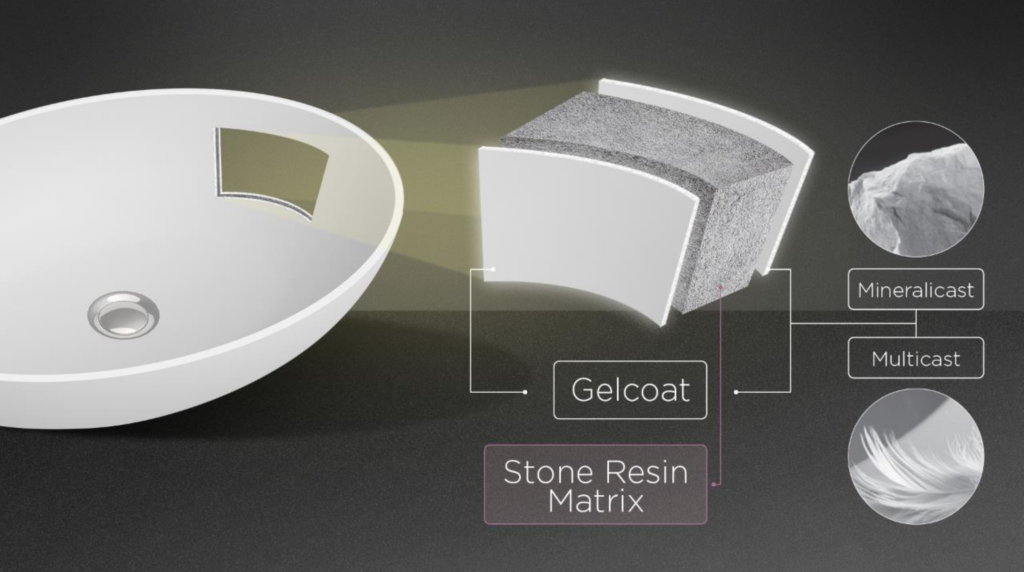
Material quality determines how the product looks, performs and ages over time. In bathroom fixtures, common options include ceramic, acrylic, mineral composites, cast stone and solid surface materials. In kitchen sinks, quartz composites, stainless steel and ceramic are among the most common choices. Each material has its own strengths, price position and visual character.
Durability is closely connected to material quality, but also depends on production control, coating quality, testing and finishing. A premium bathtub, washbasin, shower tray or kitchen sink should resist everyday use, moisture, cleaning, temperature changes and minor mechanical damage. For B2B buyers, durability is not only a technical issue. It affects complaints, returns, after-sales work and long-term brand perception.
Product feel is more intangible, but often just as important. Does the product feel solid, refined and premium? Does the surface finish support the price point? Would your own customers understand why this product belongs in a higher-end bathroom, hotel room, showroom or kitchen collection?
Marmorin’s own approach is a useful example. The company, a B2B bathroom fixtures and kitchen sinks manufacturer, focuses on advanced composite materials: dolomitic marble-based cast mineral composite for bathroom products, ultra-light composite for larger washbasins and bathtubs, pure solid surface, and quartz composite for kitchen sinks. This material focus supports products that are durable, visually refined and suitable for premium interiors. It is a strong choice if you want to introduce a premium line under your own brand, design an upscale hotel bathroom, or source durable products for high-use residential and hospitality projects.
If you want to learn more about the properties of composite bathroom fixtures vs. ceramics from a B2B perspective, check out our article on this topic.
The same line of thinking should guide your supplier choice. Before committing, ask whether the manufacturer’s material capabilities truly match the product quality, durability and emotional impression your market expects.

Need help choosing the right B2B supplier of bathroom fixtures or kitchen sinks?
Get in touch with Angelika Jachimowicz, our Key Account Manager. She will listen to your needs, help you understand the available cooperation models and suggest the best solution for your brand, project or product line.
04. Check quality control and repeatability
A sample can tell you whether a supplier is capable of making a good product once. It does not tell you whether they can manufacture the same product repeatedly, at the same quality level, across future orders. For B2B sourcing, this difference matters a lot.
The first step is to ask direct questions about the inspection process. Does the manufacturer check every product or only selected batches? What exactly is verified: dimensions, surface quality, colour consistency, flatness, tap hole position, drainage, construction straightness, packaging quality before dispatch? A serious supplier should be able to explain this clearly, not only answer that “quality is important”.
The second step is to ask for proof. This can include quality certificates, information about ISO procedures, laboratory capabilities, product testing methods or examples of internal quality control reports. ISO 9001 is especially relevant because it indicates that the manufacturer has formal quality management procedures, rather than relying only on informal checks. ISO 14001 points to environmental management, which may also matter if your brand or project has sustainability requirements.
You can also ask whether the supplier has an in-house laboratory, certified testing processes or independent verification through TÜV or similar bodies. This does not automatically guarantee that every product will be perfect, but it does show that quality is managed through systems, tests and procedures. For bathroom fixtures and kitchen sinks, that can include checks related to durability, cleanability, thermal shock, scratch resistance, drainage, surface quality, dimensions and finishing.
If the project is significant, a factory visit or audit is also worth considering. Seeing the production process, testing area, storage conditions and final inspection stage can reveal more than a presentation. It also helps you understand whether the supplier is prepared for repeat orders, larger volumes and long-term cooperation.
You should also ask how claims are handled. What happens if products arrive with defects? How are problems reported, analysed and prevented in future production? A supplier’s answer to this question often says a lot about their maturity.
In short, do not evaluate only the first product you see. Evaluate the system behind it. The right manufacturing partner should be able to prove that quality is not accidental, but repeatable.
Tip: ask about the claim rate
One of the obsessions of a strong B2B supplier should be its claim rate. A low claim rate means fewer problems for their clients like complaints from end users and less pressure on their sales, service and after-sales teams.
Imagine sourcing 5,000 bathtubs, washbasins or shower trays and then discovering that 5% of them lead to customer issues. That is 250 cases you suddenly need to handle: emails, photos, replacements, transport, explanations, internal discussions and potential damage to your brand reputation.
There is no single universal benchmark for every product category and price segment, but for a premium B2B bathroom fixtures or kitchen sink manufacturer, a claim rate below 1% is a strong signal.
The point is not only the number itself. The point is also whether the manufacturer measures it, understands it and uses it to improve production.
05. Understand MOQ, samples, customisation and lead times
Commercial terms are another important criterion when choosing a bathroom fixtures or kitchen sink manufacturer. Product quality matters, but so do the conditions that determine how easy it is to start, test and scale the cooperation.
One of the first points to check is the minimum order quantity (MOQ). In many manufacturing sectors, suppliers expect buyers to commit to a certain volume before production becomes viable. This is understandable, but it can create risk for brands, retailers and distributors that want to test a new product line before placing a larger order.
“A lack of MOQs is a rarity in our industry and, of course, this can be an operational challenge. But our experience is simple: the end customers of our clients respond very well to the products we manufacture. So why not make it easy and comfortable for our clients to discover that? If they can test products in their own markets without major upfront risk, then many of them will grow into larger partnerships.”
Agnieszka Maliszewska, Chief Sales Officer at Marmorin
Samples and first production pieces are also important. Before committing to a wider launch, you may need to evaluate the surface finish, colour, weight, selected technical details and overall product feel. A serious supplier should be able to explain what type of sample, prototype or first article is realistic for your cooperation model.
Customisation is another topic to be discussed early. Many B2B manufacturers in the bathroom fixtures and kitchen sinks industry have limited flexibility because even small changes can create production challenges. A different colour, finish, dimension, edge detail, overflow position, bowl depth or packaging requirement may affect tooling, testing, quality control or production planning. That does not mean customisation is impossible, but you need to know what is genuinely adjustable, what requires a new development process and what is not commercially realistic.
Lead times should be understood in the same practical way. Private label based on existing designs will usually be the fastest route, often measured in weeks rather than months. OEM lead times depend heavily on the quality of the buyer’s documentation and whether new tooling or testing is required. Custom product development is usually the longest path and may take 4-8 months, especially when design, engineering, prototyping, tooling and testing are all involved.
The best supplier is not only the one with attractive products. It is the one whose commercial terms make it realistic for you to start, test, adjust and scale.
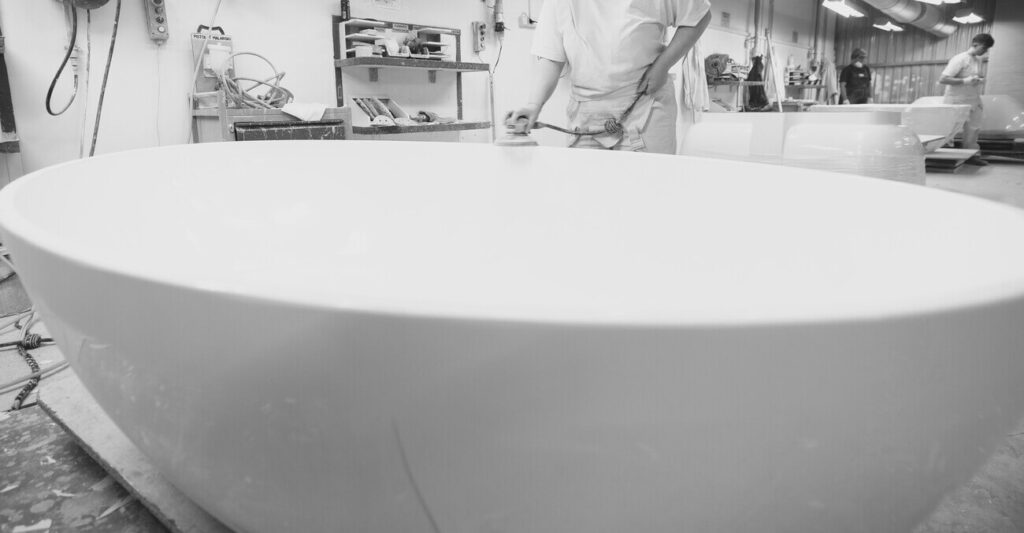
06. Look at sellability, not only production capacity
A good manufacturing partner should not only be able to produce the product. They should help you bring to market something your own customers will immediately understand, appreciate and want to buy.
This is especially important in premium bathroom fixtures and kitchen sinks. Whether you are building a retail collection, specifying products for a hotel, or choosing fixtures for a premium residential project, the product needs to create a clear reason to choose it. Production capacity matters, but sellability matters just as much.
There are several things worth evaluating. First, does the product offer practical reasons to buy, such as enhanced durability, easy cleaning, repairability or the ability to keep water warm for longer? Second, does it provide safety-related advantages, such as anti-slip properties in shower trays or a hygienic, non-porous surface? Third, does the product look and feel premium enough to impress the buyer, guest or end customer? Design, surface finish, colour depth and material feel can all influence the buying decision.
For retailers, distributors and brands, these features become sales arguments. They help sales and marketing teams answer the inevitable question: why should someone buy this product instead of another one, especially if this one is more expensive? If the supplier also offers product training, those arguments are more likely to be understood, remembered and used correctly in real sales conversations. That supports the real goal of the entire exercise: stronger sales and higher turnover.
For hotels, architects and developers, sellability works in a different way. The product may not need to convince a shopper in a showroom, but it still needs to create an experience. A bathtub, washbasin or shower tray can make a hotel bathroom feel more premium, make a residential project more desirable, or help an architect deliver the level of finish promised to the client. In that context, the right product is not only something that performs well. It helps create the “wow” moment that makes guests remember the place, buyers value the property and clients recommend the project.
Tip: does your supplier make the “why-buy” question easy to answer?
If you are a brand, retailer or distributor, choose products and suppliers that help your sales team answer the inevitable question: “Why should I buy this product instead of a cheaper alternative?”
A strong answer should not rely on vague claims such as “premium quality” or “better design”. It should connect product features to clear customer value. A good manufacturing partner will help you achieve exactly that.
For example:
“Why is this product worth the premium price? First, it’s made from a durable composite material designed for long-term use, and small surface damage can be easily repaired instead of replacing the entire product. Second, in categories such as shower trays, features like anti-slip properties support everyday safety and comfort. Third, the smooth surface, refined finish and colour depth create the kind of premium impression customers expect in a high-end bathroom.
In summary, if you’re only looking for the lowest possible price, this may not be the right choice. But if you want true, tangible value – this is the strongest option.”
Read more on this important topic here.
07. Assess formal and operational readiness
When choosing a bathroom fixtures or kitchen sink supplier for B2B, do not treat compliance, documentation and export readiness as administrative details. They are practical safeguards that help you sell, specify, install and repeat orders with less risk.
First, check product compliance. A serious supplier should be able to explain which standards apply to each product category and whether its products are tested against them. In Europe, this may include relevant EN standards for washbasins, bathtubs, shower trays or kitchen sinks. Without this, you may face problems with specification, market acceptance, complaints or project approval.
Second, ask what documentation the supplier can provide. This may include technical drawings, dimensions, installation instructions, material information, cleaning and maintenance guidelines, product data sheets and declarations of conformity. Good documentation helps your sales team, installers, architects, specifiers and after-sales department work with the product confidently.
Third, assess export readiness. If you are sourcing internationally, the supplier should be able to communicate clearly in English, prepare export documents, package products safely for transport, plan repeat deliveries and support clients across different markets.
Finally, check whether the supplier understands professional B2B expectations. Can they support specification questions swiftly? Can they provide clear technical answers? Can they help if your client, architect, installer or procurement team needs additional information? This is often where the difference between B2B-focused and consumer-brand-led manufacturers becomes most visible.
A reliable OEM or private label manufacturer is not only ready to produce. It is ready to help you bring products to market safely, professionally and with the formal support that B2B buyers expect.
Tip: be aware of the real cost of Europe vs Asia sourcing
Asian suppliers can often look more attractive at first because unit prices may be lower, partly due to lower labour and production costs. But the purchase price is not the same as the real cost of sourcing. Depending on the supplier and product category, common challenges may include longer lead times, higher freight exposure, communication issues, less flexibility in adjustments and greater difficulty verifying consistent quality before shipment.
This does not mean Asian sourcing is always a poor choice. The point is to compare the full sourcing equation, not only the quoted price. For premium bathroom fixtures and kitchen sinks, those factors can matter as much as the product itself.
Read this article for a full comparison of Europe vs. Asia sanitary ware sourcing.
Final checklist: choose the supplier that fits your business, not just your product
Sourcing bathroom fixtures or kitchen sinks in B2B is not only about finding a manufacturer that can make a good-looking product. The stronger question is whether the supplier can support your commercial goal, your product strategy and the expectations of your own customers.
The questions below summarise the key decisions covered in this guide and can help you evaluate whether a supplier is truly the right fit:
1. Cooperation model
- Is speed, flexibility, exclusivity or production capacity your main priority?
- Which cooperation model best supports that priority: private label, OEM, ODM or custom product development?
2. Product line strategy
- Are you sourcing one product or building a coherent product family?
- Could the first product later become a wider collection?
- Can the supplier support matching products across bathtubs, washbasins, shower trays or kitchen sinks, and will they feel consistent in terms of design, material, finish and quality?
3. Materials and product feel
- Does the supplier’s material expertise match your target market?
- Will the product feel premium enough for your customers, guests or project buyers?
- Does the material offer clear benefits such as durability, easy maintenance or repairability?
4. Quality control and repeatability
- What exactly is checked before dispatch, and are those quality checks systematic, documented and repeatable?
- Can they prove quality through certificates, testing processes or internal reports?
- What is their claim rate and how are problems handled?
5. Commercial terms
- What minimum order quantities apply?
- Can you test the product before committing to larger volumes?
- What level of customisation is realistic?
- What lead times should you expect for your preferred cooperation model (private label, ODM, OEM etc.)?
6. Sellability
- Does the product give your sales team strong reasons to justify the price?
- Are the benefits easy to explain to customers?
- Can the supplier support your team with product knowledge or sales training?
7. Formal and operational readiness
- Are the products compliant with relevant standards in your market?
- Can the supplier provide drawings, product data, installation instructions and declarations?
- Are they prepared for international B2B cooperation?
The right manufacturer is not simply the one with the lowest price or the widest catalogue. It is the one whose expertise, processes and cooperation model make it easier for your business to launch the right products, sell them with confidence and turn them into a strong source of revenue.
We hope you found this guide useful. If you still have questions or need help choosing the right manufacturing partner for your business, we encourage you to click here and book a meeting with one of our advisors.